

Key takeaways
- SEO friendly blog post now means writing with search intent, ensuring content is clear and quotable for AI systems
- Key factors for SEO friendly blog posts include trustworthiness, machine-readability, answer-first structure, and topical authority
- Conduct thorough keyword research and find readers’ questions to match search intent effectively
- Use clear headings, improve readability, include inclusive language, and add relevant media to engage readers
- Write compelling meta titles and descriptions, link to existing content, and focus on building authority to enhance visibility
What does an SEO-friendly blog post mean in the AI era?
The way people search for information has changed, and with it, the meaning of an SEO-friendly blog post. Before the rise of generative AI, writing an SEO-friendly blog post mostly meant this:
‘Writing content with the intention of ranking highly in search engine results pages (SERPs). The content is optimized for specific target keywords, easy to read, and provides value to the reader.’
That definition is not wrong. But it is no longer complete.
In the AI era, an SEO-friendly blog post is written with search intent first, answering a user’s question clearly and efficiently. It is not just about placing keywords in the right spots. It is about creating an information-dense piece with accurate, well-structured, and quotable sentences that AI systems can confidently extract and surface as direct answers.
The new definition clearly shows that strong SEO foundations still matter, and they matter more than ever. What has changed is how content is evaluated and discovered. Search engines and AI models now look beyond clicks and rankings to understand whether your content is trustworthy, helpful, and easy to interpret.
Here are some key factors that play a key role in determining whether a blog post is truly SEO-friendly:
- Trustworthiness (E-E-A-T): Demonstrating real-world experience, expertise, and credibility helps your content stand out from low-value AI-generated rehashes
- Machine-readability: Clear structure, clean HTML, and technical signals such as schema markup help search engines and AI systems understand what your content is about
- Answer-first structure: Placing concise, direct answers at the beginning of sections makes it easier for AI models to extract and reference your content
- Topical authority: Publishing interconnected, in-depth content around a subject is far more effective than creating isolated blog posts
9 tips to write SEO-friendly blogs for LLM and SERP visibility
Now we get to the core of this guide. Below are some foundational tips to help you plan and write SEO-friendly blog posts that are genuinely helpful, easy to understand, and focused on solving real reader problems. When done right, these practices not only improve search visibility but also shape how your brand is perceived by both users and AI systems.
1. Conduct thorough keyword research
Before you start writing a single word, start with solid keyword research. This step helps you understand how people search for a topic, which terms carry demand, and how competitive those searches are. It also ensures your content aligns with real user intent instead of assumptions.
You can use tools like Google Keyword Planner, Ahrefs, or Semrush for this. Personally, I prefer using Semrush’s Keyword Magic Tool because it quickly surfaces thousands of relevant keyword ideas around a single topic.
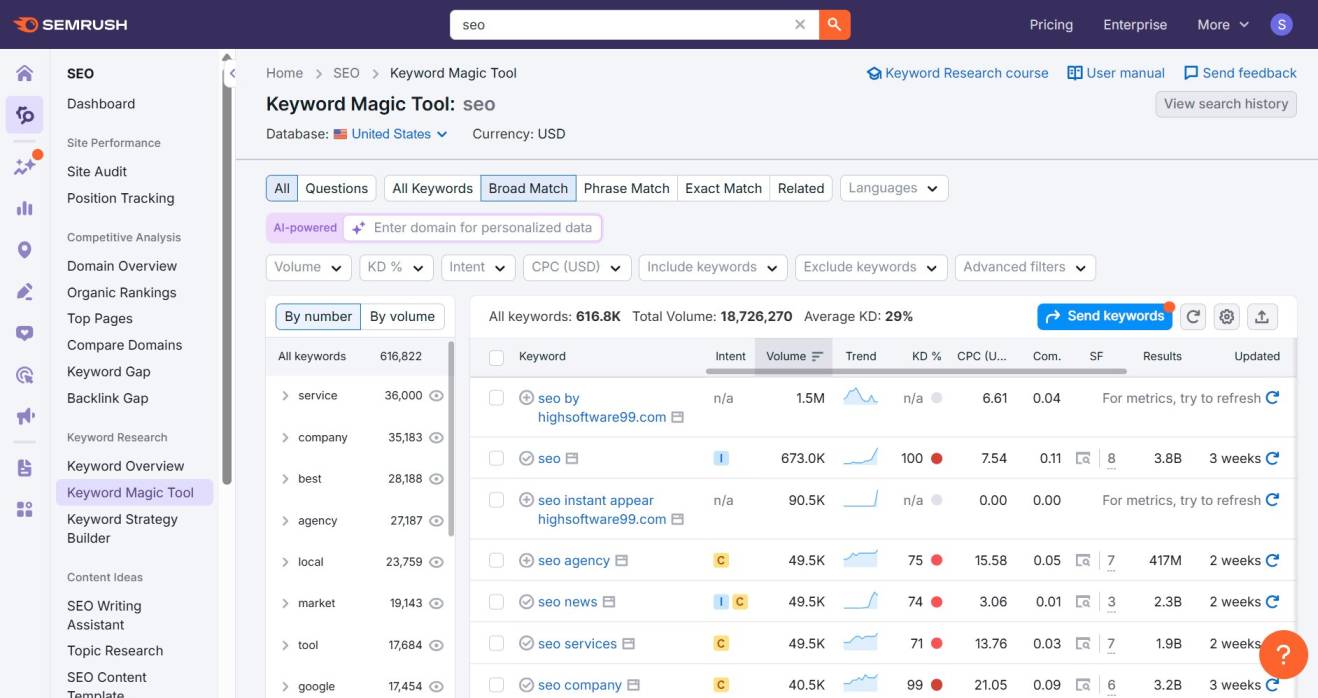
Here’s how I usually approach it. I enter a broad keyword related to my topic, for example, ‘SEO.’ The tool then returns an extensive list of related keywords along with important metrics. I mainly focus on three of them:
- Search intent, to understand what the user is really looking for
- Keyword Difficulty (KD%), to estimate how hard it is to rank
- Search volume, to gauge demand
This combination helps me choose keywords that are realistic to rank for and meaningful for readers.
If you use Yoast SEO, this process becomes even easier. Semrush is integrated into Yoast SEO (both free and Premium), giving you keyword suggestions directly in Yoast SEO. With a single click, you can access relevant keyword data while writing, making it easier to create focused, useful content from the start.
Looking for keyphrase suggestions? When you’ve set a focus keyword in Yoast SEO, you can click on ‘Get related keyphrases’ and our Semrush integration will help you find high-performing keyphrases!
Also read: How to use the Semrush related keyphrases feature in Yoast SEO for WordPress
2. Finding readers’ questions
Keyword research tells you what people search for. Questions tell you why they search.
When you actively look for the questions your audience is asking, you move closer to matching search intent. This is especially important in the AI era, where search engines and AI models prioritize clear, answer-driven content.
For example, consider these two queries:
What are the key features of good running shoes?
This shows informational intent. The searcher wants to understand what makes a running shoe good.
What are the best running shoes?
This suggests a transactional or commercial intent. The searcher is likely comparing options before making a purchase.
Both questions are valid, but they require very different content approaches.
There are two simple ways I usually find relevant questions. The first is by checking the People also ask section in Google search results. By typing in a broad keyphrase, you can see related questions that Google itself considers relevant.
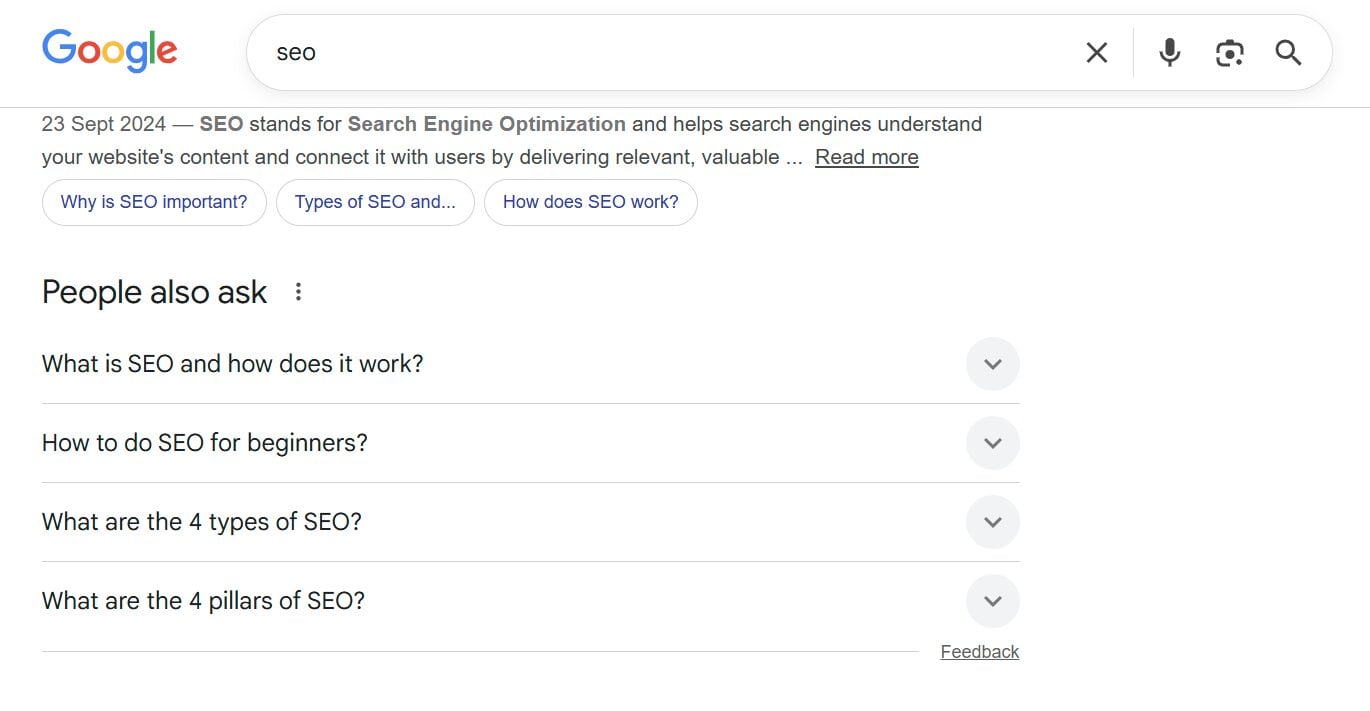
The second method is to use the Questions filter in Semrush’s Keyword Magic Tool. This helps uncover question-based queries directly tied to your main topic.
Apart from these methods, I also like using Google’s AI Overview and AI mode as a quick research layer. When I search for my main topic, I pay close attention to AI-cited sources, as they often surface broad questions people are actively seeking. The structured points and highlighted terms usually reflect the answers and subtopics that matter most to users. If I want to go deeper, I click “Show more,” which reveals additional angles and follow-up questions I might not have considered initially.
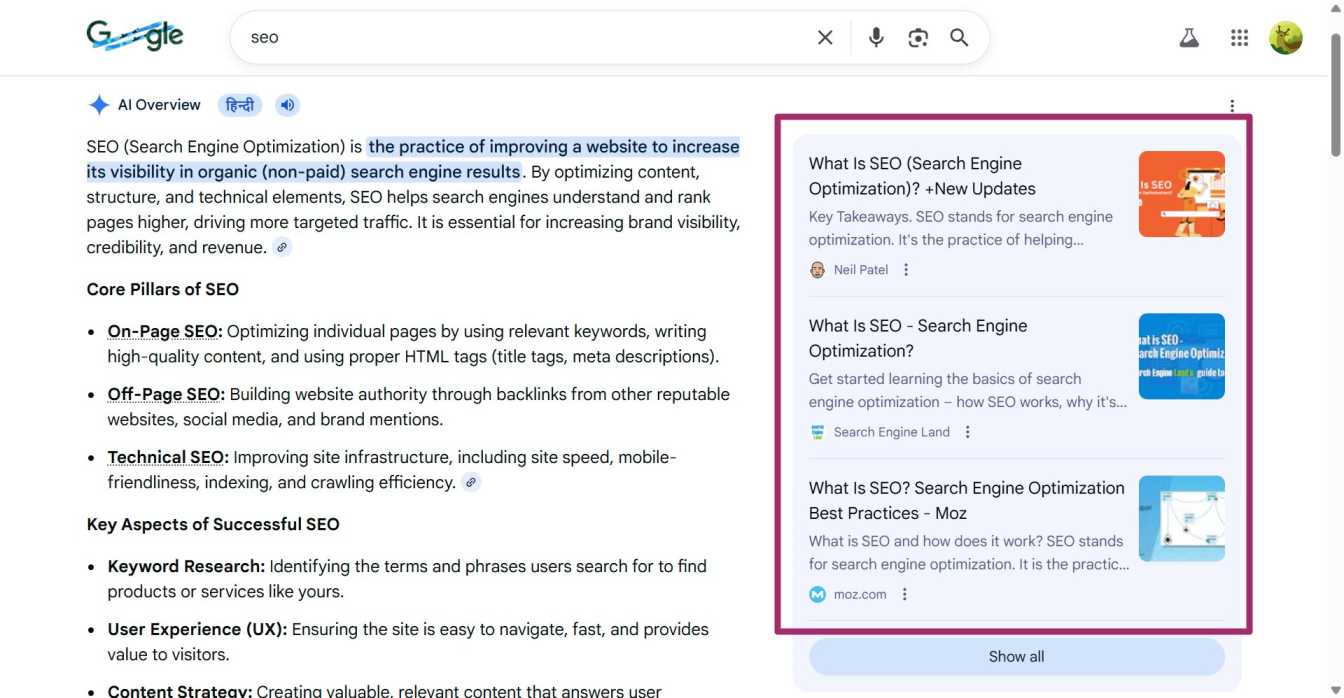
Finding and answering these questions helps you do lightweight online audience research and create content that feels genuinely helpful. It also increases the chances of your blog post being referenced in AI-generated answers, since LLMs are designed to surface clear responses to specific questions.
3. Structure your content with headings and subheadings
In our 2026 SEO predictions, we highlighted that editorial quality is no longer just about good writing. It has become a machine-readability requirement. Content that is clearly structured is easier to understand, reuse, and surface across both search and AI-driven experiences.
How LLMs use headings
AI models rely on headings to identify topics, questions, and answers within a page. When your content is broken into clear sections, it becomes easier for them to extract key information and include it in AI-generated summaries.
Why headings still matter for SEO
Headings help search engines understand the hierarchy of your content and the main points you are trying to rank for. They also improve scannability and usability, especially on mobile devices, and increase the chances of earning featured snippets.
Good structure has always been a core SEO principle. In the AI era, it remains one of the simplest and most effective ways to improve visibility and discoverability.
4. Focus on readability aspects
An SEO-friendly blog post should be easy to read before it can rank or get picked up by AI systems. Readability helps readers stay engaged and helps search engines and AI models better understand your content.
A few key readability aspects to focus on while writing:
- Avoid passive voice where possible
Active sentences are clearer and more direct. They make it easier for readers to understand who is doing what, and they reduce ambiguity for AI systems processing your content. - Use transition words
Transition words like “because,” “for example,” and “however” guide readers through your content. They improve flow and make it easier to follow relationships between sentences and paragraphs. - Keep sentences and paragraphs short
Long, complex sentences reduce clarity. Breaking content into shorter sentences and paragraphs improves scannability and comprehension. - Avoid consecutive sentences starting in the same way
Varying sentence structure keeps your writing engaging and prevents it from sounding repetitive or robotic.
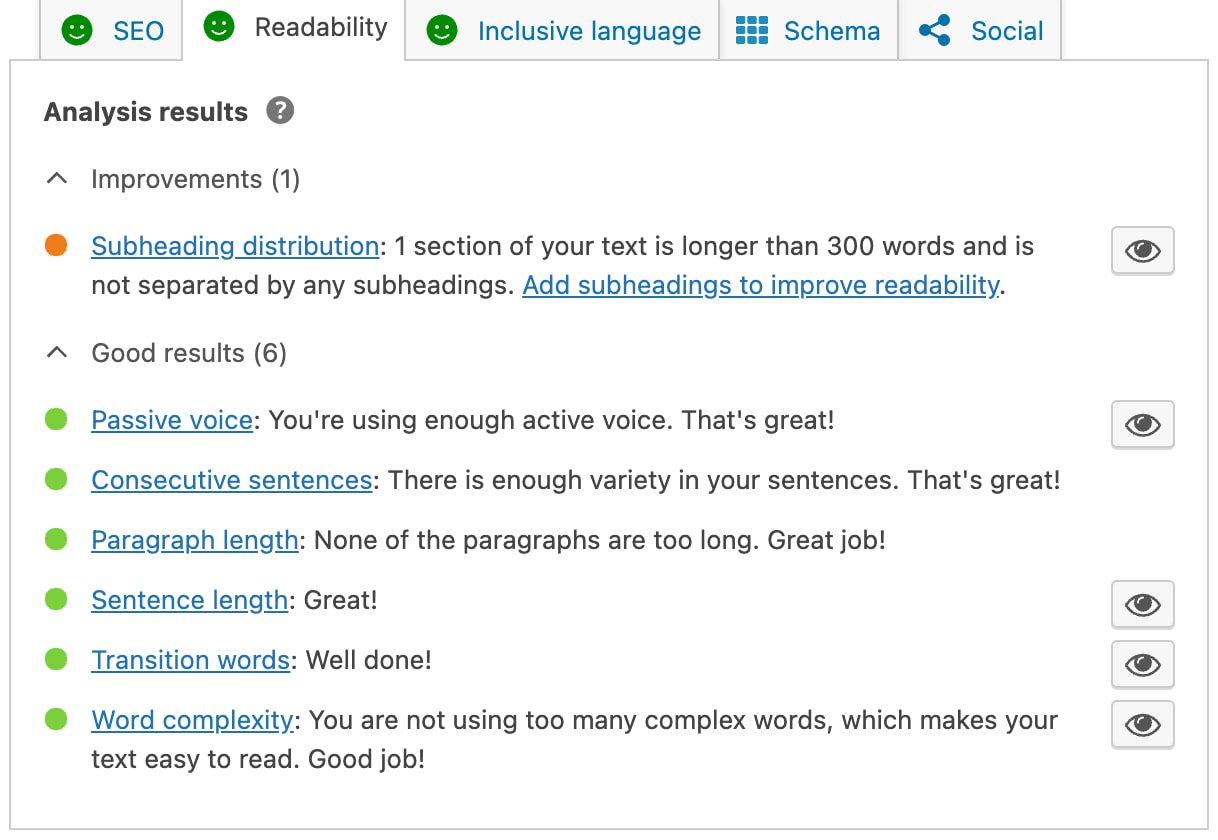
If you are a WordPress or Shopify user, Yoast SEO (and Yoast SEO for Shopify for Shopify users) can help here. Its readability analysis checks for passive voice, transition words, sentence length, and other clarity signals while you write. If you prefer drafting in Google Docs, you can use the Yoast SEO Google Docs add-on to get the same readability feedback before publishing.